
How can a Seattle pedestrian accident lawyer help after a crash?A Seattle personal injury lawyer proves the driver failed to yield under RCW 46.62.235, secures your Washington State Patrol collision report, and deals with the insurance company for you. Crashes on high-injury streets like Aurora Avenue North or Rainier Avenue South often require rapid evidence collection before video and witness memories are lost. |
After you are hit by a car, the days that follow are hard. You may be facing surgery, missed work, and phone calls from insurance adjusters you did not expect. When your injuries happened because a driver did not use reasonable care, you have the right to seek money for what you lost.
Bernard Law Group moves quickly on the evidence that decides these cases — intersection camera footage, signal-timing records, and witnesses whose memories fade by the week — while handling the adjuster so you don’t have to.
Why footwork wins pedestrian cases. Fault often comes down to who had the right of way and where each party was at the time of impact. Our attorneys reconstruct those seconds, because a driver’s “they came out of nowhere” rarely survives a clear timeline.
A record of real recoveries. The firm’s verdicts and settlements include substantial results for people struck by vehicles. Past results depend on the facts of each case and do not promise or predict a future outcome — and you can hear directly from former clients in their reviews.
One collision, several possible defendants. A pedestrian claim can reach beyond the driver to an employer, a rideshare policy, or the coverage behind a car accident — and we chase down every applicable source before anyone settles cheap.
No fee unless we win. You owe nothing to start and nothing at all unless we recover for you; the fee is a set share of the result, agreed up front.
Not sure whether you even have a case? A quick, free review will tell you. Reach out today, or read more about founder Kirk Bernard and his work for injured Washingtonians.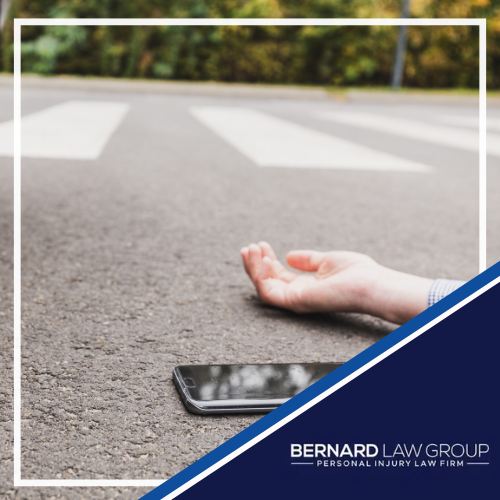
What should you do after a pedestrian accident in Seattle?
Get medical care first, then report the crash to the Seattle Police Department or Washington State Patrol. Under RCW 46.61.245, every driver has a legal duty to use care to avoid hitting a person on foot, so early records that show what the driver did matter a great deal.
Take these steps as soon as you are able:
- See a doctor right away. Go to an emergency room, such as Harborview Medical Center, the region’s Level I trauma center. Prompt treatment protects your health and stops an adjuster from claiming your injuries were not serious.
- Get the police report. Ask for a copy of the collision report through the Washington State Patrol records system or the Seattle Police Department, depending on who responded.
- Photograph everything. Take pictures of the crosswalk, the signal, the vehicle, skid marks, your injuries, and the street where you were hit.
- Do not give a recorded statement. Politely decline to speak on the record with the other driver’s insurer until your attorney is with you.
Local Reality: The report can take weeks
If a Seattle Police Department officer or Washington State Patrol trooper responded to your crash, the written collision report is usually not ready right away. In most cases, reports appear in the state’s electronic system about two to six weeks after the crash. Because the report can lag, other evidence has to be locked down fast. Security video from a nearby business or a bus camera near a corridor like Aurora Avenue North is often overwritten within days, so a preservation request needs to go out quickly.
What causes pedestrian accidents in Seattle?
Most pedestrian crashes come from driver choices, not the pedestrian’s actions. A driver who is not paying attention or is moving too fast for the setting is the leading cause of serious injury on Seattle streets.
Common causes we see in local claims include:
- Distracted Driving: Drivers looking at phones instead of the crosswalk in front of them.
- Failure to Yield: Drivers turning across a crosswalk or rolling through it without stopping, in violation of RCW 46.61.235.
- Speeding on Arterials: Higher speeds on streets like Rainier Avenue South leave little time to stop and make injuries far worse.
- Impaired Driving: Alcohol or drugs that slow down a driver’s reaction time.
- Poor Visibility: Dark, rainy Seattle winters and gaps in street lighting that hide people crossing.
- Backing-up Crashes: Drivers reversing in parking lots and driveways without checking behind them.
What injuries are common in pedestrian crashes in Seattle?
Pedestrian crashes in Seattle commonly cause traumatic brain injuries, bone fractures, spinal damage, internal bleeding, and severe lacerations because pedestrians have no physical protection against a motor vehicle.
Injuries we regularly handle include:
- Traumatic brain injuries: Head trauma from the impact or from hitting the ground, which can affect memory, mood, and daily function.
- Broken bones: Fractured legs, hips, arms, and pelvis that often need surgery and long rehab.
- Spinal cord and back injuries: Damage that can lead to chronic pain, herniated discs, or paralysis.
- Internal injuries: Organ damage and internal bleeding that require emergency care.
- Amputations: Loss of a limb after a severe crush injury, especially in crashes with trucks or buses.
- Road rash and deep cuts: Wounds that can scar or become infected.
Who is legally responsible for a pedestrian crash in Seattle?
The driver who hit you is the most common responsible party, but not the only one. Liability depends on proving that someone owed you a duty of care, broke it, and caused your injuries.
Parties who may be responsible include:
- The driver, for speeding, distracted driving, or failing to yield under the Washington Motor Vehicle Act.
- An employer, when the driver was working, such as a delivery van or company truck driver.
- A transit agency, like King County Metro or Sound Transit, when a bus or train operator caused the crash.
- A government body, such as the City of Seattle, when a dangerous street design or broken signal played a role. Washington courts have recognized that government entities have a duty to keep roads reasonably safe.
Why pedestrian liability can get complicated in Seattle
Determining who is legally at fault for a pedestrian crash in Seattle often involves navigating complex state traffic laws, tight public agency deadlines, and aggressive insurance tactics designed to shift blame.
- More than one party may share fault, which changes how a claim is valued and who pays.
- Transit and city claims follow special rules and shorter procedural steps than a normal car claim.
- Commercial drivers may be covered by large business policies that come with aggressive defense lawyers.
- Camera and phone evidence that proves fault often lives with third parties and disappears fast.
- A driver may argue you were outside the crosswalk, which brings Washington’s comparative fault rule into play.
Legal tip from our attorneys
One detail many people miss: under RCW 46.61.235, a driver may not pass another vehicle that has stopped at a crosswalk to let someone cross. This causes what our attorneys call a “multiple-threat” crash, where a walker steps out from in front of a stopped car and is struck by a driver speeding past in the next lane. These cases can look like the pedestrian’s fault at first glance, but the passing driver often carries most or all of the blame. The stopped car, the crosswalk markings, and any nearby camera footage can tell that story, which is why it helps to have someone document the scene early.
What can you recover in a pedestrian accident claim?
You can seek payment for both your out-of-pocket costs and the personal toll of the crash. These are usually split into economic and non-economic damages, based on the evidence you gather.
Your measurable financial losses (economic damages):
- Past and future medical bills, including surgery, therapy, and medication
- Lost wages for time you missed at work
- Reduced earning power if you cannot return to the same job
- The cost of adaptive equipment or home changes after a serious injury
The personal impact on your life (non-economic damages):
- Physical pain and suffering
- Emotional distress and anxiety from the crash
- Loss of enjoyment of the activities and routines you love
- Permanent scarring, disfigurement, or disability
How long do you have to file a pedestrian accident claim in Seattle?
In most cases, you have three years from the date of the crash to file a pedestrian injury lawsuit under RCW 4.16.080. If you miss that deadline, the court will usually dismiss your case and you lose the right to recover.
Pitfall Alert: Claims against a city or transit agency work differently
If a government vehicle or a dangerous public street was involved, extra steps apply. Before you can sue a local government like the City of Seattle, King County Metro, or Sound Transit, you must first file a formal tort claim form and then wait 60 calendar days before filing your lawsuit, under RCW 4.96.020. The three-year deadline still applies, but the 60-day wait is added on, and the claim must be delivered in person or by mail to the agency’s designated agent, not by email or fax. These steps are strict, and a small mistake can sink an otherwise strong case, so it helps to talk to a lawyer early.
Do you need a lawyer for a Seattle pedestrian accident?
A lawyer protects you from insurance tactics meant to lower your payout and makes sure evidence is saved before it disappears. An attorney also tracks the deadlines and court rules o crucial deadlines and court rules are followed.
As Seattle pedestrian accident lawyers, we can help in these ways:
- Shielding you from the insurer: Your lawyer handles the calls, so you are not pressured into a recorded statement or a low offer.
- Locking down evidence early: Your team secures the collision report, witness accounts, and camera footage before they are gone.
- Managing the deadlines: From the three-year rule under RCW 4.16.080 to the special government claim steps, an attorney keeps your filings on time.
The Opponent Playbook: “You stepped out in front of me”
Washington uses a pure comparative fault rule under RCW 4.22.005. This means you can still recover money even if you were partly at fault, but your payment is reduced by your share of the blame. Insurers know this, so a common move is to pin some blame on the walker.
In pedestrian cases, an adjuster may claim you crossed outside the crosswalk under RCW 46.61.240, stepped out suddenly, or wore dark clothing at night. On a poorly lit stretch of Lake City Way, they may argue you were hard to see. We answer these claims with hard evidence, such as signal timing, witness statements, and the driver’s own speed, to keep the focus on the driver’s duty to watch the road.
How we prepare your pedestrian case for trial
Even when a case settles, the work that goes into getting it ready for court is what drives a fair result. Our team prepares every file with that standard in mind.
- Evidence preservation: We send early hold letters for dashcam, bus, and business camera footage and pull the collision report and 911 records.
- Expert coordination: When needed, we work with accident reconstruction engineers, medical specialists, and life-care planners to show how the crash happened and what your recovery will cost.
- Trial readiness: We prepare witnesses, build exhibits, and file in the correct Washington Superior Court, so the insurer knows we are ready to present your case to a jury if they will not offer a fair number.
What does the pedestrian claim process look like?
A Washington pedestrian claim moves through a set of steps, guided by the Washington Superior Court Civil Rules (CR). Our team manages each stage so you can focus on getting better.
- Review and intake. We look at how the crash happened, find the available insurance coverage, and check the local court rules that apply.
- Evidence work. We send preservation letters, pull the Washington State Patrol collision report, and gather nearby camera footage and witness accounts.
- Medical tracking. We follow your treatment until your doctors say you have reached maximum medical improvement, so current and projected future costs are accounted for.
- The demand. We put your medical records, wage loss, and proof of fault into a demand package and send it to the insurer.
- Negotiation. We negotiate with the adjuster and push back on comparative fault and other common defenses to reach a fair result out of court.
- Filing suit if needed. If the offer does not cover your losses, we file a complaint in the correct Washington Superior Court and prepare for trial.
How do you choose the right Seattle pedestrian accident lawyer?
Look at a firm’s experience with your type of case, its track record, and how clearly it explains your options. Your team should have the resources to take on large insurance companies.
Does the firm handle pedestrian and vulnerable-user cases?
Pedestrian claims are different from a standard car crash. They turn on crosswalk law, right-of-way, and comparative fault. Over more than 30 years, Bernard Law Group has focused on personal injury, including cases for people hurt while walking, biking, and crossing the street.
Can the firm point to real results?
Our firm has recovered over $500 million for more than 10,000 injured people across Washington. Results depend on the facts of each case and do not promise a similar outcome.
Does the firm know Seattle?
Local knowledge matters when it comes to pulling records and knowing the courts, from filing timelines in King County Superior Court to how Seattle handles a claim over a dangerous street. Our long presence in the Puget Sound region gives us that footing.
Is the firm ready to go to trial?
The best offers often come when the insurer knows your lawyers will not settle for less than the case is worth. We prepare each file for court so we keep that leverage.
What Past Clients Have to Say
Bernard Law Group shares feedback from past clients so you know what to expect from our communication and support.
“I was stopped and a lady rear-ended me. When I called Bernard Law Group, they took care of everything. I never had to deal with the insurance company again. I didn’t have to deal with any of my medical bills again. I would highly recommend Bernard Law Group.”
– Lonnie Humpal
“I was in a head-on car accident, and the person that hit me had no car insurance. I had uninsured motorist insurance, but my insurance company didn’t return my phone calls, didn’t seem to care, so I called Kirk Bernard. Kirk Bernard did more than get justice for me. He hit a home run!”
– James Parshall
“When I got out of the vehicle, I was rear-ended. I had a broken leg, broken in three places, my knee was broken in two places. It was professional all the way through and that was very helpful. If had it to do over again, I would definitely hire the Bernard Law Group.”
– Alice Johnson
Disclaimer: This client shared this feedback voluntarily, for information only. It is not a promise about the result of any future case. Every case has its own facts.


Case results
These results show the kinds of cases we take on against government agencies, transportation companies, and large insurers.
$27 Million Jury Award (Municipal Vehicle Crash): A municipal railway truck collision killed a 4-year-old girl and seriously hurt three surviving family members and friends.
$12.5 Million Settlement (King County Metro Bus): A King County Metro bus drove onto a sidewalk and struck a pedestrian, causing injuries that led to a leg amputation and a lifetime of medical care.
$18.5 Million Settlement (I-5 Commercial Truck Crash): Our client suffered a severe traumatic brain injury near Centralia when a commercial dump truck made an illegal U-turn across an Interstate 5 on-ramp.
Disclaimer: These outcomes are based on the specific facts of past cases. They are not a guarantee or a prediction of how your case will turn out.
Areas we serve
Bernard Law Group represents injured pedestrians across Washington. Whether you were hurt in Seattle or a smaller community, our team can manage your claim.
We serve clients in these locations:
- Seattle
- Bellevue
- Bellingham
- Everett
- Federal Way
- Kent
- Kirkland
- Olympia
- Redmond
- Renton
- Spokane
- Tacoma
- Vancouver
- Wenatchee
- Yakima
Frequently asked questions
Can I still recover money if I was partly at fault for the crash?
Washington uses a pure comparative fault rule under RCW 4.22.005, so you can recover even if you were partly to blame, such as crossing outside a marked crosswalk under RCW 46.61.240. Your payment is reduced by your share of fault, which is why proving the driver’s role, on a street like Rainier Avenue South, matters.
Do I have to give the driver’s insurance company a recorded statement?
When you file a claim against another driver in Washington, you generally do not have to give their insurer a recorded statement. Anything you say can be used to argue you were at fault, so it is wise to speak with a Seattle pedestrian accident attorney and know your rights before any recorded interview with an adjuster.
What if a King County Metro bus or Sound Transit vehicle hit me?
You can still bring a claim, but the rules are stricter. Under RCW 4.96.020, you must first file a formal tort claim form with the agency and wait 60 days before suing. The form must be delivered in person or by mail, not email, so getting help early protects your claim.
What if the driver who hit me had no insurance or fled the scene?
You may still have options. If you or a household member has auto insurance, uninsured and underinsured motorist coverage often applies even when you are hurt while walking. In a hit-and-run, that coverage may pay for your injuries. We help pedestrians in Seattle explore all viable sources of coverage.
Does my own car insurance help if I was hit while walking?
If you carry Personal Injury Protection (PIP) on your auto policy, it can pay for your medical bills even though you were on foot, not driving, when a car hit you. This coverage often applies right away, before fault is decided, which helps cover early treatment at places like Harborview Medical Center.
Helpful Local Resources
After a serious injury, quick access to care and records matters. We share these public resources for your convenience. We do not endorse them, and we do not profit from listing them.
Emergency Rooms
- Harborview Medical Center — 325 9th Ave, Seattle, WA 98104
- Swedish First Hill Emergency Room — 700 Minor Ave, Seattle, WA 98122
- UW Medical Center – Northwest Emergency Room — 1550 N 115th St, Seattle, WA 98133
Records and Reports
- Washington State Patrol Collision Records (electronic report system)
- Seattle Police Department, Public Request Unit — 610 5th Ave, Seattle, WA 98104
Local Courthouses
- King County Courthouse (Superior Court) — 516 Third Avenue, Seattle, WA 98104
- Maleng Regional Justice Center — 401 4th Ave N, Kent, WA 98032
- U.S. District Court (Western District of Washington) — 700 Stewart Street, Seattle, WA 98101
Get a free case review today
When you are dealing with medical bills, lost income, and pushy insurance adjusters, time matters. We work on a contingency fee basis, so you pay nothing up front and we are only paid if we recover money for you.
Call our office to speak with a real person, or fill out our online case review form to map out your next steps.
Main Office: 900 Aurora Avenue North, Suite 100, Seattle, WA 98109
Phone: (206) 339-7824 — available 24 hours a day, 7 days a week
Consultations: Free, offered statewide in person or by secure video.
Attorney review and office information
This page was written and reviewed by the legal team at Bernard Law Group to match current Washington laws and court rules. Every case we take is handled by lawyers who are licensed and in good standing with the Washington State Bar Association.
Bernard Law Group — Seattle Office 900 Aurora Ave N, Suite 100, Seattle, WA 98109 Phone: (206) 339-7824 — Consultations are free, and we are available 24/7.

